

Major activities
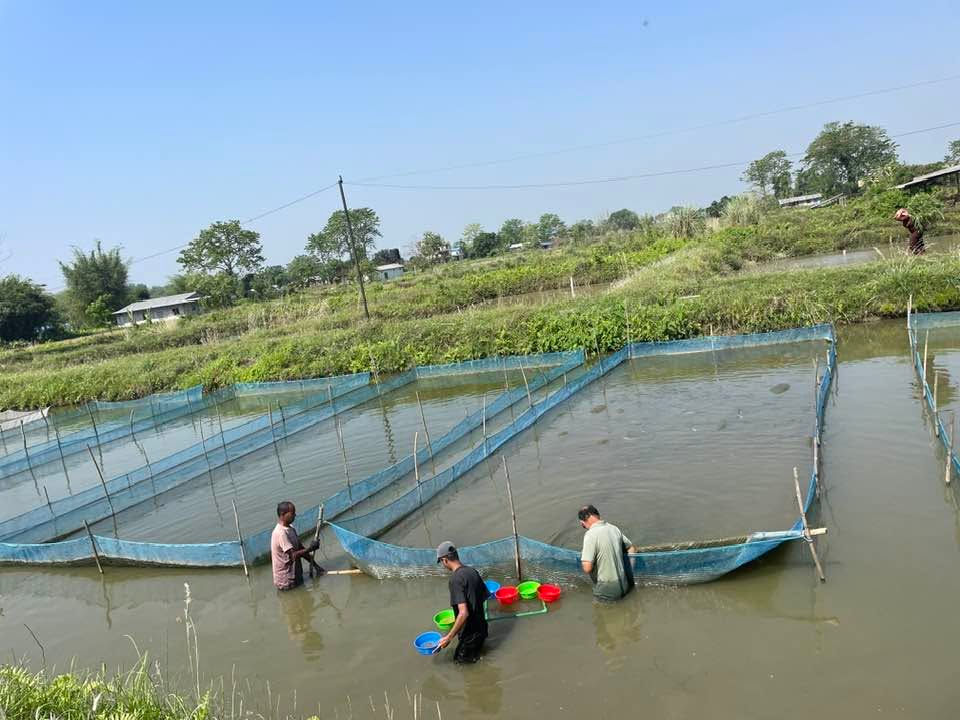
Major activities of CAARP include production of fish and fingerlings of Tilapia, Sahar and Chinese and Indian Major carps, research and hand-on training, and community development activities. To be engaged and know more about our activities, please visit our Social media: https://www.facebook.com/groups/caarp.club
A: Fish and seed production include
-
Tilapia hatchery operation is the main activity at CAARP which is done to produce high quality monosex tilapia seed. It involves the following 11 critical steps:
-
Management of broodstock in hapas (sex ratio 2 females per 1 male).
-
Weekly collection of eggs
-
Sepearating the seed based on the developmental stages (stage 1-5),
-
Incubating eggs in downwelling jars,
-
Larval rearing of yolk-sac larvae for about 7 days.
-
Sex-reversal of swim up fry by feeding hormone 5 times a day after stocking in hapas for 21 days
-
Grading the monosex fry and further nursing to around 5g
-
Advance nursing to 10-20 g.
-
Conditioning of fry in clear water tank without feeding for overnight.
-
Packing in polythene bag before transportation.
-
Regular monitoring of quality (% male).
-
-
Establishment of an eco-friendly integrated aquaculture-agriculture farm
-
Establishment of aquaculture-agriculture service and hope centre (AASH-Centre) for collaborative research, training, technical and laboratory services to aqua-agro entrepreneurs and professionals.
-
Establishment of F3 Aqua-tourism facility (Fish, Fun, and Farm guesthouse).
-
Serve and sell fresh and quality farm products from CAARP sales centres.
-
Breeding of Golden Mahaseer (Tor putitora) and giant freshwater prwan.

B: Research
CAARP collaborate with various universities through which research is done attractingthe students to carry out their thesis research using the facilities of CAARP. The MSc Thesis Research conducted at CAARP farm in with collaboration are as follows::
-
Bailey Keeler (December 2016). Stocking density effects of small indigenous species (SIS) on carp polyculture systems in Nepal. University of Michigan (UM), USA
-
Ladislao Di Domenica (2012). Small-scale cooperative based aquaculture in Kathar, Nepal. George-August Universitat Goettingen, Germany
-
Shailesh Gurung (July 2013). Nutrient budget analysis in carp-based polyculture ponds. IAAS, Tribhuvan University, Nepal
-
Mina Mahatara (2022). Sex reversal of Nile tilapia fry using Methyltestosterone (MT) treated soybean meal. IAAS, Tribhuvan University, Nepal
-
Sonu Kadel (2022). Replacement of fishmeal with soybean meal in growth performance of mono sex Nile tilapia. IAAS, Tribhuvan University, Nepal
C: Training programs
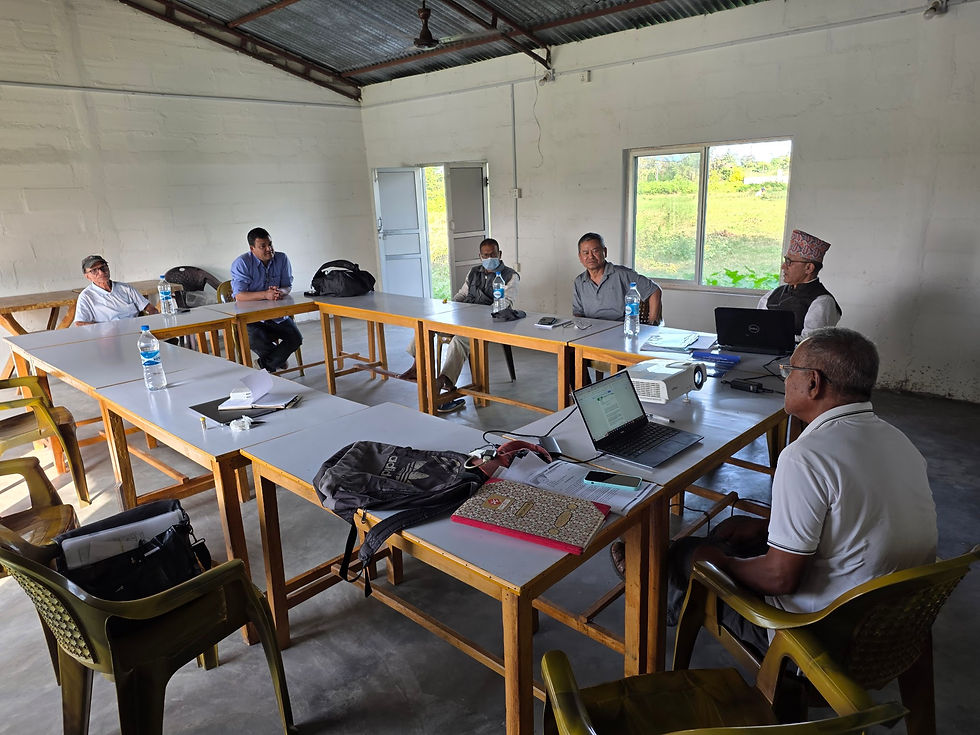
CAARP has been organizing several hands-on training which ranges from 1 day to two week training on tilapia culture and other fish species. Training programs are cusomized based on the needs of the group. The followings are the two examples of training organized in the past:
1. Training on commercial tilapia farming - 20-23 Baishakh 2076 (3-6 May 2019):
Program schedule and List of participants
2. Training on basic fish farming - 20-24 Mansir 2077 (5-9 December 2020).
Program schedule
3. Training on basic fish farming - Chaitra 29 - Baisakh 2, 2080 (April 12-15, 2023).
Program schedule

